Blogs

30-Jul-2026

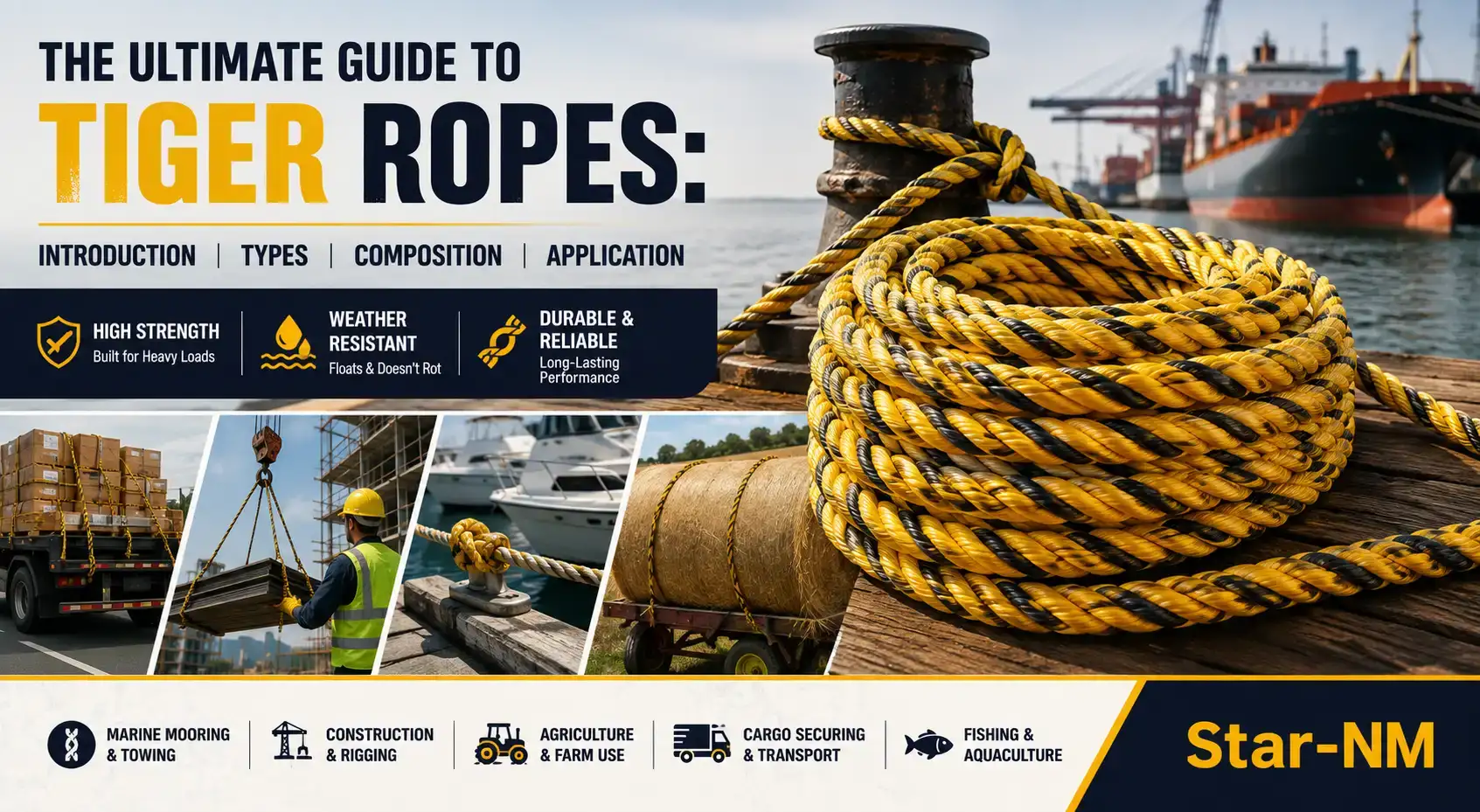
If you work in shipping, farming, or building things, you already know that regular string or weak cord will not hold heavy loads. You need a strong line that can handle rough weather, heavy weight, and constant pulling without snapping. This is where industrial tiger ropes come into play. These bright, speckled yellow and black synthetic lines are built for heavy tasks where safety and strength matter most. Whether you need to tie down cargo on a flatbed truck or secure a boat at the dock, understanding how these heavy-duty ropes are made will help you pick the right tool for your job. When buying heavy-duty ropes in bulk, procurement teams and business owners look for specific details like breaking strength, thickness, and material quality. A good rope saves time and prevents accidents on the work site. In this comprehensive guide, we will break down everything you need to know about industrial tiger ropes. We will look at how they are manufactured, the different types available in the market, the materials used to build them, and where businesses use them every day. 01. Introduction to Tiger Ropes Tiger ropes are heavy industrial lines made from strong plastic polymers. People often call them split film ropes because of the way the plastic material is processed. You can easily spot a tiger rope by its distinct look. It usually features a bright yellow base mixed with black strands, creating a striped pattern that looks a bit like a tiger. This bright color is not just for show. It helps workers see the line clearly on a busy construction site or out on the water, reducing trip hazards and improving safety. The history of these commercial lines goes back many decades. Long before modern plastics existed, workers twisted natural fibers like manila hemp, sisal, and cotton into thick cords to pull heavy items and build shelters. While those natural materials worked well in the past, they rotted quickly when left in wet weather and weakened under the sun. As manufacturing technology improved, factories started using synthetic polymers like polypropylene and polyethylene. These new materials kept the tough, twisted structure of traditional ropes but added modern benefits like water resistance, high tensile strength, and long life spans. Today, these heavy-duty lines form the backbone of many global industries. Shipping companies use them to tie large vessels to port docks. Construction workers use them to lift heavy building materials and secure safety nets. Farmers use them to tie down farm equipment and bundle heavy crops. Because they do not rot when wet and can carry heavy weights without breaking, they remain a top choice for commercial buyers around the world. 02. Types of Tiger Ropes Manufacturers build different styles of tiger ropes to match specific industrial needs. Choosing the right design depends on the job you want to do. Here are the main types you will find in the wholesale market. 2.1. 3-Strand Twisted Utility Ropes This is the most common style of tiger rope used in daily commercial work. Factories twist three long strands of plastic fibers together in a specific direction to create a strong, flexible line. This 3-strand design gives the rope great knot-holding power. When workers tie a knot in a 3-strand line, the twists lock together tightly and stay secure under heavy pulling force. It bends easily, making it simple to coil, store, and handle on job sites. 2.2. 4-Strand Composite Ropes For heavier tasks, manufacturers add an extra strand to the center of the rope. This 4-strand design creates a rounder shape and a smoother outer surface. The extra strand helps spread the load evenly across the entire thickness of the line. Because the surface is smoother, it slides easily through pulleys and suffers less damage when dragged across rough concrete or metal edges. 2.3. Heavy-Duty Industrial Mooring Ropes Port authorities and shipping companies rely on thick mooring lines to keep massive cargo ships steady against ocean waves and tides. These mooring lines are built with extra thickness and high tensile strength. They absorb the sudden jerks and pulls caused by wind and water movement, preventing the ship from breaking away from the dock. 2.4. High-Tenacity Synthetic Blend Ropes Some industrial tasks require a mix of different plastic polymers to get the best results. These blended lines combine polypropylene and polyester to create a rope that floats on water, resists damage from sunlight, and stretches very little under heavy loads. This makes them ideal for outdoor work where the weather changes constantly. 03. Tiger Ropes Composition To understand why these lines last so long, you need to look closely at what they are made of and how factories put them together. 3.1. Core Material Structure Synthetic Polymer Foundations: The heart of every quality tiger rope is high-grade polypropylene or high-density polyethylene film. Factories melt these plastic resins and stretch them into thin tapes. These tapes provide a high strength-to-weight ratio. Because plastic does not absorb water, the rope stays lightweight even when working in heavy rain or sea water. Blended Filament Integration: Some manufacturing lines mix polyester or nylon yarns into the plastic mix. This blend improves the overall tensile threshold of the line. It stops the rope from stretching too much when you pull on it hard, giving workers better control when lifting or towing heavy loads. 3.2. Strand Construction Mechanics Twist Lay and Tension Control: Making a strong rope requires precise mechanical twisting. Factories use large machines to twist individual fibers in one direction, then twist multiple strands together in the opposite direction. This opposing twist creates natural friction between the fibers. That friction locks the material in place so the rope will not unravell when under extreme tension. Core Lubrication and Treatments: During the manufacturing process, makers apply specialized protective treatments to the inner fibers. This coating reduces friction when the inner strands rub against each other under a heavy load. Less internal friction means the rope wears out much slower and lasts through many months of hard work. 3.3. Protective Outer Coatings UV-Stabilized Sheathing: Sunlight destroys cheap plastic over time. To stop this, factories mix ultraviolet stabilizers directly into the outer polymer layers. These chemical additives block harmful sun rays, keeping the plastic strong and flexible even after months of outdoor exposure in bright sunlight. Abrasion-Resistant Finishes: Work sites are tough on equipment. Ropes constantly rub against rough wood, sharp metal edges, and gritty dirt. Manufacturers add tough surface finishes to the outer strands. This coating acts like a shield, preventing the fibers from fraying or tearing when dragged across rough surfaces. 04. Applications of Tiger Ropes Commercial buyers use these strong lines across many different fields. Here is where you will see them working hard every day. 4.1. Marine Mooring and Towing Port operators and commercial fishermen use thick tiger ropes to secure boats and ships to docks. Because polypropylene naturally floats, rescue teams and marine workers like using these lines because they stay visible on top of the water and do not sink into propellers. They hold strong against salty ocean water without rotting or weakening. 4.2. Construction Rigging and Material Handling Building sites require reliable gear to lift steel bars, wooden planks, and heavy tools. Contractors use these strong lines to create temporary safety barriers, hoist materials up to upper floors, and tie down scaffolding poles. The high breaking strength helps keep workers safe by preventing dropped loads. 4.3. Agricultural and Farm Logistics Farmers deal with heavy loads during harvest season. They use these durable lines to bundle large stacks of hay, secure heavy tarps over grain storage, and tie down equipment on farm trailers. The plastic material does not rot when exposed to dirt, mud, and animal waste, making it perfect for farm life. 4.4. Cargo Securing and Transport Truck drivers and freight companies use these lines to lash down boxes and equipment on the backs of open flatbed trucks. When driving down the highway at high speeds, cargo cannot shift around. These strong ropes hold freight tightly in place through wind and bumpy roads. 4.5. Commercial Fishing and Aquaculture Fish farms and commercial fishing boats use these synthetic lines to anchor nets, hold floating cages, and haul catches. The salt water and constant wet conditions ruin natural ropes quickly, but these plastic lines hold up for years without losing their strength. 05. Maintenance, Care, and Storage Even the toughest industrial rope needs a little care to reach its maximum lifespan. Following proper maintenance steps keeps your investment safe and reliable. 5.1. Regular Cleaning Procedures Dirt, sand, and grit act like sandpaper on rope fibers. When tiny rocks get trapped inside the twists, they cut the plastic threads every time you pull the line. Wash dirty ropes using clean water and mild soap. Rinse away all dirt and let the line dry completely before packing it away. 5.2. Proper Storage Practices Never leave your ropes lying out in the hot sun when you finish your work. Store coils in a cool, dry warehouse away from direct sunlight and harsh chemicals like paint thinners or motor oil. Proper indoor storage protects the plastic polymers from heat damage and keeps the material strong for the next job. 5.3. Inspection Routines Before every major lift or towing job, workers should run their hands along the entire length of the line. Look closely for frayed spots, cuts, melted areas, or faded patches. If a section looks damaged or thin, cut that part away or replace the entire rope to avoid accidents. 06. Safety Guidelines for Using Tiger Ropes Using heavy-duty equipment requires strict safety habits to protect workers and prevent property damage. 6.1. Check Load Limits Every rope has a safe working load limit set by the manufacturer. Never guess how much weight a line can hold. Check the product specifications and make sure the weight of your load stays well below the maximum limit. 6.2. Use Proper Knots Bad knots slip under pressure and cause sudden failures. Learn standard industrial knots that hold tight under heavy tension. A proper knot maintains most of the rope's original strength, while a poor knot can cut the strength of the line in half. 6.3. Avoid Overloading and Sharp Bends Do not push a rope beyond its breaking point. If you hear fibers popping or stretching too much, stop immediately. Also, avoid wrapping a tight rope around sharp metal corners without using protective padding, as sharp edges can slice right through synthetic fibers. 07. Innovative Uses of Tiger Ropes Beyond standard industrial tasks, modern technicians and project managers find creative ways to deploy these strong synthetic lines in specialized commercial environments. 7.1. Industrial Barrier Systems Facility managers use high-visibility tiger ropes to mark off dangerous work zones in factories and warehouses. The bright yellow and black pattern catches the eye of workers instantly, preventing unauthorized entry into active loading bays and crane operating zones. 7.2. Temporary Utility Rigging Utility repair crews use floating plastic lines to pull cables through underground conduits or string temporary boundary markers across work sites. Because the rope resists moisture and dirt, workers can pull it through wet trenches without ruining the fibers. 08. Environmental Impact of Tiger Ropes Industrial buyers care about sustainability and material lifecycles when choosing products for large-scale operations. 8.1. Eco-Friendly Manufacturing and Recyclability Modern polymer producers focus on creating thermoplastic materials that can be melted down and reprocessed into new plastic goods at the end of their lifecycle. This closed-loop recycling process reduces industrial plastic waste and lowers the carbon footprint of heavy rope production. 8.2. Resistance to Environmental Decay Unlike natural plant fibers that rot and shed organic waste into rivers or soil, high-grade synthetic polymer ropes maintain their structural integrity without leaching harmful chemicals into marine or agricultural ecosystems during normal long-term use. 09. The Future of Tiger Ropes The technology behind industrial cordage continues to advance as factories adopt new manufacturing methods to improve strength and reduce weight. 9.1. Technological Advancements in Extrusion New polymer extrusion machinery allows factories to draw tighter, more uniform plastic tapes. This precision manufacturing creates lines with higher breaking loads and better resistance to continuous friction under heavy loads. 9.2. Expanding Market Trends Global trade, shipping port expansions, and modern agricultural logistics drive constant demand for durable synthetic lines. Manufacturers continue to innovate with advanced polymer blends to meet the rising requirements of international commercial buyers. 10. Conclusion Industrial tiger ropes are essential tools for modern shipping, farming, building, and logistics. From their bright striped look and strong synthetic composition to their wide use in marine and construction work, these lines prove their value every single day. By understanding how they are built, picking the right type for your task, and taking care of them properly, you can ensure safe and reliable performance on every job site. Get Your High-Performance Tiger Ropes Today If your business needs dependable, heavy-duty lines for shipping, construction, or farm work, choosing the right supplier makes all the difference. Working with a reliable tiger rope manufacturer ensures you get products that meet strict industrial standards and handle the toughest daily jobs without failing. Star-NM provides top-quality industrial lines built for heavy commercial use. Contact our team today to discuss your wholesale needs, request product specifications, and place your bulk order for high-performance ropes.

24-Jul-2024

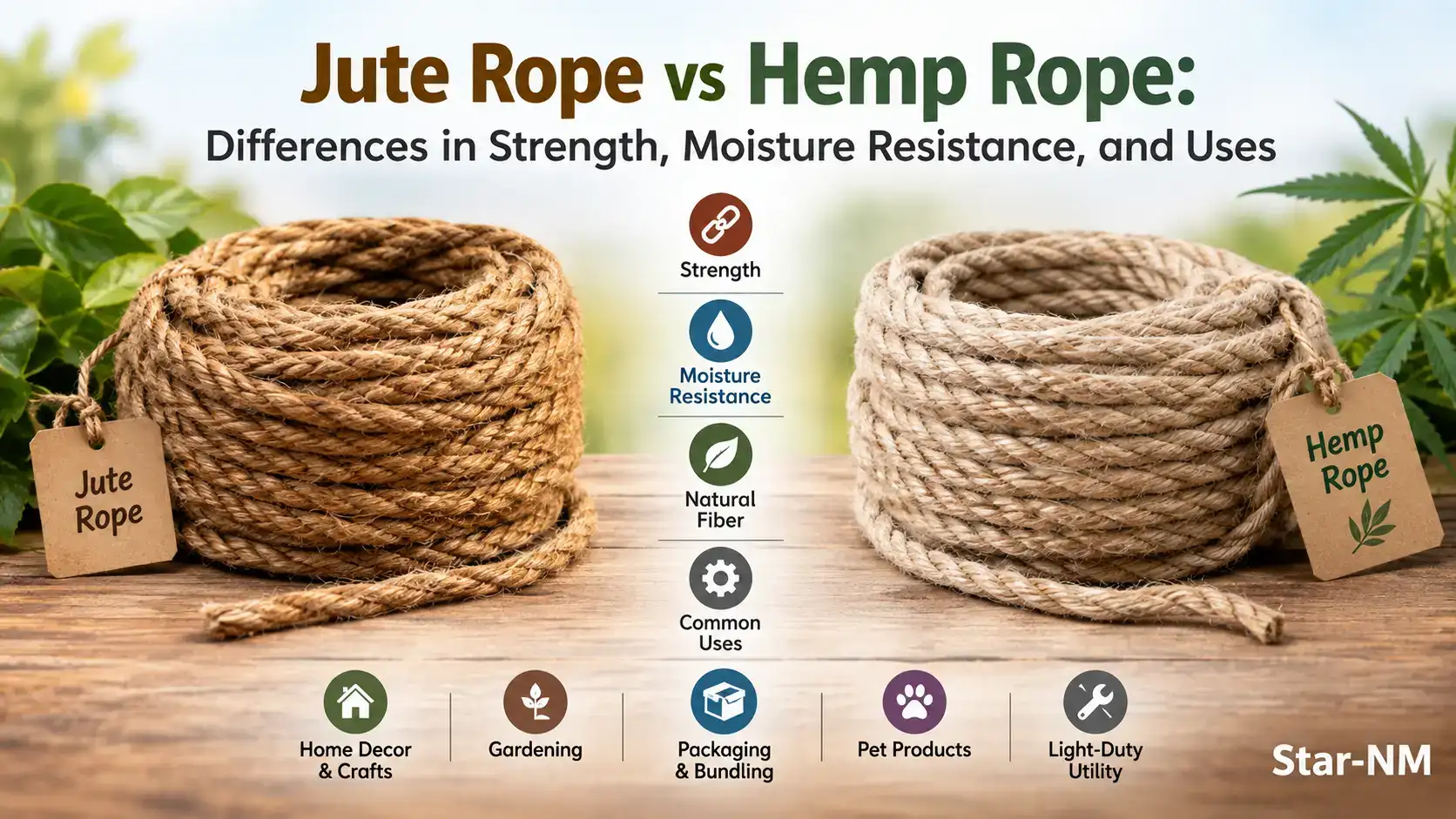
The choices can be overwhelming when selecting the perfect rope for your project. Two popular options that often come up are hemp rope and jute rope. Both have unique properties and advantages, but how do you know which is right for you? This article delves into the specifics of each type of rope, comparing their characteristics, uses, and benefits to help you make an informed decision. What is a Hemp Rope? Hemp rope is made from the fibers of the hemp plant (Cannabis sativa). Due to its durability and strength, hemp has been used for centuries in various applications. The fibers are extracted from the plant, processed, and twisted into rope. Characteristics of Hemp Rope ·        Strength: Hemp rope is incredibly strong and durable, ideal for heavy-duty applications. ·        Durability: It resists rot and mildew better than many other natural fibers. ·        Flexibility: Despite its strength, hemp rope is flexible and easy to work with. ·        Eco-Friendly: Hemp is a sustainable crop that grows quickly and requires minimal pesticides. What is Jute Rope? Jute rope is made from the fibers of the jute plant (Corchorus genus). Jute is a long, soft, and shiny vegetable fiber that can be spun into coarse, strong threads. Characteristics of Jute Rope ·        Softness: Jute rope is softer and more pliable than hemp rope. ·        Natural Look: It has a rustic, earthy, aesthetically pleasing appearance for certain projects. ·        Biodegradability: Jute is biodegradable and compostable, making it an environmentally friendly choice. ·        Cost-Effective: Generally, jute rope is less expensive than hemp rope. Comparing Strength and Durability 1.   Hemp Rope Hemp rope is known for its exceptional strength and resistance to wear and tear. This makes it suitable for: ·        Outdoor Use: Its resistance to rot and mildew makes it ideal for outdoor applications. ·        Heavy Loads: Perfect for lifting and pulling heavy objects. ·        Longevity: It can withstand harsh conditions over long periods. 2.   Jute Rope While jute rope is strong, it does not match the durability of hemp rope. However, it excels in: ·        Indoor Use: Ideal for decorative purposes or light-duty indoor applications. ·        Temporary Projects: Suitable for projects where the rope won't be exposed to harsh conditions. ·        Ease of Handling: Its softness makes crafts and home decor easier. Environmental Impact 1.   Hemp Rope Hemp is a highly sustainable crop. It proliferates, requires less water than cotton, and needs minimal pesticides. The entire plant can be utilized, reducing waste. 2.   Jute Rope Jute is also an eco-friendly option. It is biodegradable and compostable, which makes it a great choice for those concerned about environmental impact. However, jute cultivation requires more water than hemp. Uses and Applications 1.   Common Uses for Hemp Rope ·        Agriculture: For tying, bundling, and fencing. ·        Construction: In scaffolding and heavy lifting. ·        Marine: Due to its rot resistance, it’s used in boating and fishing. ·        Crafts and Decor: Its rustic look is popular in various DIY projects. 2.   Common Uses for Jute Rope ·        Home Decor: Ideal for wall hangings, plant hangers, and other decorative items. ·        Crafts: Widely used in arts and crafts due to its softness and flexibility. ·        Packaging: Often used for tying and bundling lightweight packages. ·        Gardening: Suitable for tying plants and other garden uses. Cost Considerations 1.   Hemp Rope Due to its strength and durability, hemp rope is generally more expensive. However, its long lifespan can make it a more cost-effective choice in the long run. 2.   Jute Rope Jute rope is usually cheaper, making it a budget-friendly option for many projects. Its cost-effectiveness is particularly beneficial for temporary or indoor projects where extreme durability is not required. Aesthetic Appeal 1.   Hemp Rope Hemp rope has a rough, rugged appearance that can add a rustic charm to projects. It’s often used in vintage or industrial-themed decor. 2.   Jute Rope Jute rope has a softer, more natural look. Its light brown color and smoother texture make it ideal for home decor projects where aesthetics are important. Flexibility and Ease of Use 1.   Hemp Rope While strong, hemp rope is flexible and can be used in various applications without hassle. Its flexibility makes it suitable for knotting and weaving. 2.   Jute Rope Jute rope is softer and easier to handle, making it perfect for crafts and projects that require intricate work. Its flexibility makes it a favorite among crafters and DIY enthusiasts. Maintenance and Care 1.   Hemp Rope Hemp rope requires minimal maintenance due to its durability. However, it should be kept dry to prevent any potential mildew growth, even though it is naturally resistant. 2.   Jute Rope Jute rope, being softer, can fray more easily and may need more care to maintain its appearance. It should be kept away from moisture to prevent rotting. Conclusion Choosing between hemp rope and jute rope ultimately depends on your specific needs and the nature of your project. If you need a strong, durable rope for heavy-duty or outdoor use, hemp rope is the superior choice. Its strength, longevity, and resistance to rot make it a reliable option for demanding applications. On the other hand, if your project is more about aesthetics, indoor use, or involves crafting and home decor, jute rope may be more suitable. Its softness, natural look, and cost-effectiveness make it an excellent choice for decorative purposes and lighter tasks. Both ropes have unique benefits and applications, so consider what aspects are most important for your project before making a decision. Hemp and jute are excellent natural options that offer sustainability and versatility.

13-Sep-2024

Fishing is not just a sport; it's a passion for many. Whether you're a seasoned angler or a beginner, one of the most crucial decisions is selecting the right fishing line. The fishing line is your direct link to the fish, and choosing the right one can make the difference between a successful day on the water and a frustrating one. In this comprehensive guide, we'll explore the different types of fishing lines available and how to select the best one for your needs. Introduction to Fishing Lines Fishing lines come in various materials, strengths, and designs, each suited for specific fishing conditions and techniques. The primary types of fishing lines include monofilament, fluorocarbon, and braided lines. Understanding the characteristics of each type can help you make an informed choice. 1.   Monofilament Fishing Lines Monofilament lines are the most commonly used type of fishing line. They are made from a single nylon strand, making them flexible and easy to handle. Monofilament lines are known for their stretchability, which can absorb shocks and make them ideal for beginners. They are also relatively inexpensive and available in a variety of colors. Advantages of Monofilament Lines ·        Flexibility and Stretch: Ideal for absorbing shocks. ·        Affordability: Generally cheaper than other types. ·        Versatility: Suitable for a wide range of fishing techniques. Disadvantages of Monofilament Lines ·        Memory: Tendency to retain coil shape, leading to tangles. ·        UV Sensitivity: Can degrade over time when exposed to sunlight. 2.   Fluorocarbon Fishing Lines Fluorocarbon lines are made from a single polyvinylidene fluoride (PVDF) strand. Due to their light refractive index, they are nearly invisible underwater, making them an excellent choice for clear-water fishing. Fluorocarbon lines are also denser than monofilament, allowing them to sink faster and providing better sensitivity. Advantages of Fluorocarbon Lines ·        Invisibility: Virtually invisible underwater. ·        Density: Sinks faster, improving bait presentation. ·        Abrasion Resistance: More resistant to nicks and cuts. Disadvantages of Fluorocarbon Lines ·        Stiffness: This can be harder to handle, especially for beginners. ·        Cost: Generally more expensive than monofilament. 3.   Braided Fishing Lines Braided lines are woven from multiple strands of synthetic fibers, such as Spectra or Dyneema. They are known for their incredible strength and thin diameter, allowing longer casts and greater reel line capacity. Braided lines have virtually no stretch, providing superior sensitivity. Advantages of Braided Lines ·        Strength: High tensile strength, ideal for heavy cover. ·        Thin Diameter: Allows longer casts and more lines on the reel. ·        Sensitivity: Excellent for detecting light bites. Disadvantages of Braided Lines ·        Visibility: Highly visible in clear water. ·        Knot Slippage: Requires special knots to prevent slipping. Comparing Line Strength and Diameter When selecting a fishing line, it's important to consider both the strength (measured in pounds) and the diameter (measured in inches or millimeters). A thicker diameter line generally means more strength but can also reduce casting distance and increase visibility. Conversely, a thinner line may cast farther and be less visible but not as strong. Key Considerations ·        Target Species: Larger fish require stronger lines. ·        Fishing Environment: Clear water may necessitate thinner, less visible lines. ·        Fishing Technique: Different techniques may benefit from varying line strengths and diameters. Choosing the Right Line for Freshwater Fishing Freshwater fishing encompasses a variety of environments, from lakes and rivers to streams and ponds. For bass fishing, many anglers prefer braided lines for their strength and sensitivity, especially in heavy cover. Trout fishing often requires lighter, more invisible lines like fluorocarbon to avoid spooking the fish. Recommendations ·        Bass Fishing: Braided line (20-50 lb test) with a fluorocarbon leader. ·        Trout Fishing: Fluorocarbon line (4-8 lb test) for clear water. Choosing the Right Line for Saltwater Fishing Saltwater fishing presents unique challenges due to its corrosive nature and the size of the fish. Braided lines are popular in saltwater fishing for their strength and thin diameter, allowing anglers to fight large fish effectively. However, monofilament is also commonly used due to its shock-absorbing properties, which are beneficial when a fish makes a sudden run. Recommendations ·        Inshore Fishing: Braided line (20-30 lb test) with a monofilament leader. ·        Offshore Fishing: Braided line (50-80 lb test) for big game fish. Specialty Fishing Lines In addition to the main types of fishing lines, specialty lines designed for specific purposes exist. Ice fishing lines are formulated to remain flexible in extremely cold temperatures, and fly fishing lines are designed with a weighted forward taper to help cast lightweight flies. Specialty Line Types ·        Ice Fishing Line: Resistant to freezing and maintains flexibility. ·        Fly Fishing Line: Weighted for casting flies, often with a floating or sinking tip. Fishing Line Maintenance and Care Proper maintenance of your fishing line can extend its lifespan and improve performance. Always rinse your line with fresh water after fishing in saltwater to prevent corrosion. Regularly check for nicks and abrasions, and replace the line when it shows signs of wear. Store your line in a cool, dark place to protect it from UV damage. Maintenance Tips ·        Rinse After Use: This is especially important for saltwater fishing. ·        Inspect Regularly: Check for damage and replace as needed. ·        Proper Storage: Keep out of direct sunlight and extreme temperatures. Conclusion Choosing the right fishing line is essential for successful fishing. Understanding the different types of fishing lines, their advantages and disadvantages, and how to select the appropriate line for your fishing conditions can significantly enhance your angling experience. Whether you opt for the versatility of monofilament, the invisibility of fluorocarbon, or the strength of braided lines, selecting the right line can help you confidently reel in that big catch. Happy fishing!

13-Sep-2024

If you've ever found yourself in a situation where your lawn mower, chainsaw, or other pull-start equipment refuses to start, you know how frustrating it can be. Starter cords, also known as pull cords or recoil starters, are an essential component of many small engines. When they malfunction, it can prevent your equipment from running, leading to delays and headaches. This comprehensive guide will explore the most common issues with starter cords and provide step-by-step solutions to fix them. By understanding these problems and how to address them, you can save time, money, and effort in maintaining your equipment. 1.  Introduction to Starter Cords Starter cords are integral to the functionality of various small engine devices. Pulling the cord engages the engine's crankshaft, initiating the combustion process needed to start the engine. Over time, these cords can experience wear and tear, leading to various issues. Recognizing and addressing these problems early can help prolong the life of your equipment and ensure it operates efficiently. 2.  Common Issues with Starter Cords 2.1 Broken or Frayed Starter Cord ·        One of the most common issues is a broken or frayed starter cord. This can occur due to regular use, exposure to the elements, or general wear and tear. A damaged cord can snap or become difficult to pull, rendering your equipment unusable. 2.2 Recoil Spring Failure ·        The recoil spring is responsible for rewinding the starter cord after you pull it. If the spring is damaged or broken, the cord will not retract properly, hanging loosely or not rewinding. 2.3 Pulley Problems ·        The pulley guides the starter cord and helps smooth its operation. Issues such as a stuck or broken pulley can hinder the cord's movement, making it difficult to start the engine. 2.4 Tangled Cord ·        Another common issue preventing the starter cord from operating smoothly is a tangled cord. This usually happens when the cord is not wound correctly or if the recoil mechanism is faulty. 2.5 Cord Not Catching ·        If the starter cord is not catching, it is not engaging the engine's crankshaft properly. This can be due to worn-out pawls or a malfunctioning recoil mechanism. 2.6 Engine Flooding ·        Sometimes, the issue might not be with the starter cord but with the engine flooding. This occurs when too much fuel enters the engine, making starting difficult. Symptoms include a strong fuel smell and a wet spark plug. 3.  Diagnosing Starter Cord Issues 3.1 Visual Inspection ·        The first step in diagnosing starter cord issues is a visual inspection. Check the cord for signs of fraying, snapping, or other damage. Inspect the pulley and recoil spring for any visible issues. 3.2 Functionality Test ·        Perform a functionality test by pulling the cord. Observe if it retracts smoothly, catches the engine properly, and if there are any unusual sounds or resistance. 4.  Fixing a Broken or Frayed Starter Cord 4.1 Gathering Materials ·        You will need a replacement cord, screwdriver, pliers, and possibly a new handle to fix a broken or frayed cord. 4.2 Removing the Old Cord ·        Disassemble the housing: Use a screwdriver to remove the screws holding the recoil housing. ·        Detach the old cord: Carefully remove the old cord from the pulley and handle. 4.3 Installing the New Cord ·        Attach the new cord: Thread the new cord through the pulley and handle. ·        Reassemble the housing: Secure the housing back with screws. 4.4 Testing ·        Pull the cord to ensure it retracts smoothly and starts the engine. 5.  Fixing Recoil Spring Issues 5.1 Identifying the Problem ·        Check if the recoil spring is broken or has lost tension. 5.2 Replacing the Recoil Spring ·        Disassemble the housing: Remove the housing to access the recoil spring. ·        Replace the spring: Carefully remove the old spring and install the new one. ·        Reassemble the housing: Secure everything back in place. 5.3 Testing ·        Test the recoil mechanism to ensure it functions correctly. 6.  Fixing Pulley Problems 6.1 Inspecting the Pulley ·        Look for signs of damage or wear on the pulley. 6.2 Replacing the Pulley ·        Disassemble the housing: Access the pulley by removing the housing. ·        Replace the pulley: Remove the damaged pulley and install a new one. ·        Reassemble the housing: Put everything back together. 6.3 Testing ·        Ensure the pulley moves smoothly and the cord operates correctly. 7.  Fixing a Tangled Cord 7.1 Untangling the Cord ·        Disassemble the housing: Remove the housing to access the cord. ·        Untangle the cord: Carefully untangle and rewind the cord on the pulley. 7.2 Preventing Future Tangles ·        Ensure the cord is wound correctly and the recoil mechanism is in good condition. 8.  Fixing Cord, Not Catching 8.1 Inspecting Pawls ·        Check the pawls for wear or damage. 8.2 Replacing Pawls ·        Disassemble the housing: Access the pawls by removing the housing. ·        Replace the pawls: Install new pawls if necessary. ·        Reassemble the housing: Secure everything back in place. 8.3 Testing ·        Ensure the cord engages the crankshaft properly. 9.  Addressing Engine Flooding 9.1 Diagnosing Flooding ·        Check for signs of flooding, such as a strong fuel smell or a wet spark plug. 9.2 Fixing Flooding ·        Drain excess fuel: Remove the excess fuel from the engine. ·        Clean the spark plug: Dry and clean the spark plug. 9.3 Testing ·        Try starting the engine again after addressing the flooding. 10.      Preventative Maintenance Tips 10.1 Regular Inspection ·        Regularly inspect the starter cord and related components to catch issues early. 10.2 Proper Storage ·        Store your equipment in a dry, sheltered place to prevent damage to the starter cord and other parts. 10.3 Lubrication ·        Keep moving parts well-lubricated to ensure smooth operation. 10.4 Using Equipment Properly ·        Follow the manufacturer's instructions for using and maintaining your equipment to prolong its life. Conclusion Starter cords are a critical component of many small engine devices. By understanding common issues and how to fix them, you can keep your equipment running smoothly and efficiently. Regular maintenance and prompt repairs can save you time, money, and frustration. Whether it's a broken cord, a malfunctioning recoil spring, or a tangled pulley, knowing how to address these problems will ensure your equipment is always ready to go when needed.

13-Sep-2024

Fishing is not just a hobby; it's a way of life for many. The choice of fishing line can make or break the experience, and among the plethora of options available, braided line and monofilament (mono) are two of the most popular. But which one should you choose? This comprehensive guide will delve into the pros and cons of braided line vs. mono, exploring their characteristics, applications, and how they can affect your angling success. Understanding the Basics: Braided Line and Monofilament Before diving into the comparison, it's essential to understand precisely braided lines and monofilament. 1.   What is a Braided Line? A braided fishing line comprises several strands of synthetic fibers, such as Spectra or Dyneema, braided together to form a single, strong line. This type of line is known for its incredible strength-to-diameter ratio, making it a favorite among anglers who need to catch large, powerful fish. 2.   What is Monofilament? Monofilament, often called mono, is a single strand of material, typically nylon, which makes it flexible and relatively easy to handle. It is widely used due to its versatility and affordability. Strength and Durability 1.   Strength of Braided Line The braided line is renowned for its exceptional strength. Despite having a smaller diameter than mono, it can handle higher tension and is less likely to break under stress. This makes it ideal for heavy-duty fishing, such as targeting big game fish or fishing in dense cover where the line might rub against obstacles. 2.   Durability of Braided Line The braided line is highly resistant to abrasion, making it suitable for rugged fishing environments. It doesn't deteriorate quickly when exposed to sunlight, saltwater, or chemicals, extending its lifespan significantly compared to other fishing lines. 3.   Strength of Monofilament Monofilament may not match the strength of the braided line, but it is still robust enough for most fishing scenarios. Its ability to stretch under pressure acts as a shock absorber, reducing the likelihood of sudden line breaks when a fish strikes hard or makes a sudden run. 4.   Durability of Monofilament Monofilament is more susceptible to UV degradation, which can weaken the line over time. It is also prone to abrasion, especially when dragged over rocks or other rough surfaces. However, with proper maintenance and regular replacement, mono can be quite durable for everyday fishing. Sensitivity and Stretch 1.   Sensitivity of Braided Line One of the standout features of a braided line is its sensitivity. Because it has minimal stretch, it allows anglers to feel even the slightest nibble. This high sensitivity is crucial for techniques that require detecting subtle bites, such as jigging and drop-shotting. 2.   Stretch of Braided Line The lack of stretch in braided lines is a double-edged sword. While it enhances sensitivity, it also means less cushion during sudden impacts. If not managed properly, this can result in hook pulls or line breaks. 3.   Sensitivity of Monofilament Monofilaments have more stretch than braided lines, which can dampen their sensitivity. This means detecting light bites might be more challenging, especially in deep water or when the line has a lot of slack. 4.   Stretch of Monofilament The stretchiness of monofilament can be beneficial. It provides a buffer that absorbs the shocks from sudden fish movements, reducing the chances of the line breaking and increasing the likelihood of landing the fish. Casting Distance and Accuracy 1.   Casting with Braided Line The braided line is known for its superior casting distance. The thin diameter allows it to cut through the air with less resistance, enabling longer casts. This can be particularly advantageous when fishing in large bodies of water where reaching distant spots is essential. 2.   Casting Accuracy with Braided Line The braided line's low stretch and high sensitivity contribute to better casting accuracy. Anglers can feel the line more precisely, allowing for better control and placement of lures. 3.   Casting with Monofilament Monofilament is generally easier to cast for beginners due to its manageable flexibility. It might not cast as far as braided line, but this is not a significant drawback for many anglers, especially those targeting smaller species or fishing in smaller areas. 4.   Casting Accuracy with Monofilament While mono is more forgiving and easier to handle, its stretch can reduce casting accuracy. The line's elasticity means the angler has less control over the lure's exact placement. Knot Strength and Ease of Use 1.   Knot Strength in Braided Line A braided line requires specific knots, such as the Palomar or double Uni knot, to maintain strength. When tied correctly, these knots hold well, but the braided line's slipperiness can make it tricky for the unfamiliar. 2.   Ease of Use with Braided Line Braided lines can be challenging to handle, especially for beginners. Its thin diameter and lack of stretch can make it prone to tangling, and special care is needed to prevent line digging into the spool. 3.   Knot Strength in Monofilament Monofilaments are generally easier to tie, and common knots, like the improved clinch or trilene knot, hold well. The line's texture allows knots to cinch down snugly without slipping. 4.   Ease of Use with Monofilament Monofilament is user-friendly and easier to manage, making it a popular choice for novice anglers. Its flexibility and stretch reduce the likelihood of tangles and line twists, enhancing the fishing experience. Visibility and Stealth 1.   Visibility of Braided Line Due to its opaque appearance, the braided line is more visible in the water. This can be a disadvantage in clear water conditions where fish are easily spooked. Many anglers use a fluorocarbon leader to mitigate this issue, combining the benefits of both lines. 2.   Stealth with Braided Line Using a fluorocarbon leader with a braided line can enhance stealth while maintaining the benefits of the braid's strength and sensitivity. This setup is effective for finesse fishing and when targeting wary fish. 3.   Visibility of Monofilament Monofilament is less visible in the water than braided lines, especially when using clear or low-visibility variants. This makes it a good choice for clear water conditions and targeting species easily frightened by visible lines. 4.   Stealth with Monofilament Monofilament's natural transparency provides a stealth advantage in many fishing scenarios. This can increase the chances of bites, particularly in pressured waters where fish have become line-shy. Applications and Best Uses 1.   Best Uses for Braided Line Braided line excels in specific fishing situations: ·        Heavy Cover Fishing: Ideal for fishing in dense vegetation, heavy timber, or rocky areas due to its abrasion resistance. ·        Big Game Fishing: Perfect for targeting large, powerful fish that require a firm line. ·        Deep Water Fishing: High sensitivity and low stretch make it excellent for deep-water techniques where detecting bites is crucial. 2.   Best Uses for Monofilament Monofilament is versatile and suitable for a variety of applications: ·        Topwater Fishing: Its buoyancy makes it ideal for topwater lures. ·        Crankbait Fishing: The stretch helps prevent the hooks from tearing out during a fight. ·        General Freshwater Fishing: Versatile and practical for various species and techniques. Environmental Impact 1.   Environmental Impact of Braided Line Braided lines are not biodegradable and can pose environmental concerns if not disposed of properly. It can last for many years in the environment, potentially harming wildlife and ecosystems. 2.   Environmental Impact of Monofilament Monofilament also poses environmental risks, though it is biodegradable over time. Improper disposal can lead to wildlife entanglement and pollution. Responsible disposal and recycling programs can mitigate these issues. Cost Considerations 1.   Cost of Braided Line A braided line is generally more expensive than monofilament. However, its durability and longevity can justify the higher initial cost, as it does not need to be replaced as frequently. 2.   Cost of Monofilament Monofilament is more affordable and widely available. It is a cost-effective option, especially for beginners or those who fish occasionally. However, it may need to be replaced more often than braided lines, especially if used frequently. Conclusion: Which Line is Right for You? Choosing between braided line and monofilament depends on your fishing needs and preferences. The braided line offers superior strength, sensitivity, and casting distance, making it ideal for heavy cover, big game, and deep-water fishing. However, its visibility and handling can be challenging. Conversely, monofilament provides versatility, ease of use, and better stealth, making it suitable for a wide range of fishing scenarios, especially in clear water and topwater fishing. Ultimately, the best choice is often a combination of both fishing ropes, utilizing the strengths of each to maximize your fishing success. By understanding the characteristics and applications of braided line vs. mono, you can make an informed decision that enhances your angling experience. Happy fishing!

20-Jun-2024

Choosing the right rope for your specific needs can be a daunting task. With so many options available, it's important to understand the differences between the materials used. Nylon ropes and polyester ropes are two of the most popular types of ropes on the market. Each has its own unique set of characteristics, benefits, and drawbacks. In this comprehensive guide, we'll delve into the details of both types of ropes to help you make an informed decision. Understanding Nylon Ropes 1.   What is Nylon? Nylon is a synthetic polymer known for its exceptional strength, elasticity, and resistance to abrasion. Developed in the 1930s, nylon quickly became a staple in the manufacturing of ropes due to its durability and versatility. 2.   Characteristics of Nylon Ropes Nylon ropes are highly valued for several key characteristics: ·        High Strength: Nylon ropes are incredibly strong, making them ideal for heavy-duty applications. ·        Elasticity: Nylon has a high level of elasticity, allowing it to stretch under load and return to its original length. This elasticity helps absorb shock loads, which is particularly useful in climbing and towing applications. ·        Abrasion Resistance: Nylon's tough surface makes it highly resistant to wear and tear, enhancing its longevity. ·        Water Resistance: While not completely waterproof, nylon ropes are resistant to mold and mildew and dry quickly after getting wet. 3.   Common Uses of Nylon Ropes Given their properties, nylon ropes are used in a variety of applications: ·        Climbing: The elasticity and strength of nylon ropes make them ideal for climbing and other sports that require shock absorption. ·        Towing and Lifting: Nylon ropes' ability to handle heavy loads without breaking is essential for towing and lifting heavy objects. ·        Marine Applications: The resistance to mildew and abrasion makes nylon ropes suitable for many marine uses, although they absorb some water, which can affect buoyancy. Learn more about nylon ropes. Understanding Polyester Ropes 1.   What is Polyester? Polyester is another synthetic polymer, first introduced in the 1940s. Polyester has become a popular choice in rope manufacturing because of its strength and resistance to environmental factors. 2.   Characteristics of Polyester Ropes Polyester ropes offer distinct advantages, including: ·        High Strength: Like nylon, polyester ropes are strong and can handle significant loads. ·        Low Stretch: Polyester has minimal stretch compared to nylon, making it ideal for applications where stability is crucial. ·        UV Resistance: Polyester is highly resistant to UV rays, preventing degradation from prolonged sun exposure. ·        Water Resistance: Polyester does not absorb water, maintaining its strength and buoyancy even when wet. ·        Chemical Resistance: Polyester is resistant to many chemicals, oils, and solvents, making it suitable for industrial applications. 3.   Common Uses of Polyester Ropes The properties of polyester ropes make them suitable for various applications: ·        Sailing and Boating: Polyester ropes' UV resistance and low water absorption make them perfect for rigging and marine use. ·        Industrial Applications: Polyester ropes' resistance to chemicals and minimal stretch make them ideal for many industrial uses, including winching and safety lines. ·        Outdoor Use: Polyester ropes' UV resistance and durability make them suitable for outdoor activities and general-purpose use. Comparing Nylon and Polyester Ropes 1.   Strength and Durability Both nylon and polyester ropes are known for their strength. However, nylon ropes are slightly stronger than polyester ropes, especially in tensile strength. On the other hand, polyester ropes offer superior resistance to UV radiation and environmental degradation. 2.   Stretch and Elasticity Nylon ropes are much more elastic than polyester ropes. This means that nylon ropes can absorb shock loads better, making them ideal for dynamic uses such as climbing and towing. In contrast, polyester ropes have minimal stretch, which provides greater stability and control, making them suitable for static applications like rigging. 3.   Water Absorption Polyester ropes have a clear advantage when it comes to water absorption. Polyester is hydrophobic and does not absorb water, maintaining its strength and buoyancy when wet. Nylon, on the other hand, can absorb water, which can affect its performance and buoyancy. 4.   UV and Chemical Resistance Polyester ropes outperform nylon ropes in terms of UV and chemical resistance. Polyester's ability to withstand prolonged sun exposure without degrading makes it ideal for outdoor and marine applications. Its resistance to chemicals and solvents makes it suitable for industrial environments. 5.   Abrasion Resistance Nylon ropes generally offer better abrasion resistance compared to polyester ropes. This makes nylon a preferred choice for applications where the rope will be subjected to constant friction and wear. Factors to Consider When Choosing Between Nylon and Polyester Ropes 1.   Application The rope's intended use is the most crucial factor in determining whether nylon or polyester is the better choice. Nylon ropes are the superior option for dynamic applications requiring elasticity and shock absorption. Polyester ropes are more suitable for static applications where stability and minimal stretch are important. 2.   Environmental Conditions Consider the environmental conditions in which the rope will be used. If the rope will be exposed to UV radiation, harsh weather, or chemicals, polyester ropes are more durable and reliable. If abrasion resistance is a key concern, nylon ropes may be the better choice. 3.   Budget While both types of ropes are generally affordable, nylon ropes can be slightly more expensive than polyester ropes due to their higher elasticity and strength. However, the price difference is usually insignificant enough to be a primary deciding factor. 4.   Longevity If long-term durability and minimal maintenance are priorities, polyester ropes offer better longevity due to their superior resistance to UV radiation, water, and chemicals. Nylon ropes, while durable, may require more frequent replacement in harsh environments. Real-World Scenarios: Nylon vs. Polyester 1.   Rock Climbing Nylon ropes are typically preferred for rock climbing due to their high elasticity and ability to absorb shock loads. This elasticity can be life-saving in the event of a fall, reducing the impact force on the climber. 2.   Sailing and Boating In sailing and boating, polyester ropes are generally the better choice. Their resistance to UV rays, minimal water absorption, and stable performance make them ideal for rigging, anchor lines, and other marine applications. 3.   Industrial Use Both nylon and polyester ropes can be used for industrial purposes such as safety lines, winching, and hauling, but the specific application will determine the best choice. Polyester ropes are favored for their chemical resistance and minimal stretch, while nylon ropes are chosen for their strength and shock-absorbing properties. 4.   Camping and Outdoor Activities Regarding camping and general outdoor use, either type of rope can be effective depending on the specific needs. Nylon ropes offer versatility and strength, while polyester ropes provide durability and stability in various weather conditions. Maintenance and Care for Nylon and Polyester Ropes 1.   Cleaning Regular cleaning is essential to maintain the performance and longevity of both nylon and polyester ropes. Use mild soap and water to clean the ropes, and avoid harsh chemicals that could degrade the fibers. 2.   Storage Store ropes in a cool, dry place away from direct sunlight and extreme temperatures. Proper storage will prevent degradation from UV rays and environmental factors. 3.   Inspection Regularly inspect your ropes for signs of wear and tear. Look for fraying, cuts, and other damage that could compromise the rope's integrity. Replace any rope that shows significant signs of wear to ensure safety and performance. Conclusion Choosing between nylon ropes and polyester ropes ultimately depends on your specific needs and the conditions in which the rope will be used. Nylon ropes excel in strength, elasticity, and abrasion resistance, making them ideal for dynamic applications and situations where shock absorption is critical. On the other hand, polyester ropes offer superior UV and chemical resistance, low stretch, and excellent performance in wet conditions, making them suitable for static applications, marine environments, and industrial uses. By understanding the key differences and applications of each type of rope, you can make an informed decision that ensures safety, efficiency, and longevity for your specific tasks. Whether climbing a mountain, sailing the seas, or working in an industrial setting, the right rope can make all the difference. Choose wisely and ensure that your equipment meets the demands of your activities.