
SOCIAL WITH US


SOCIAL WITH US

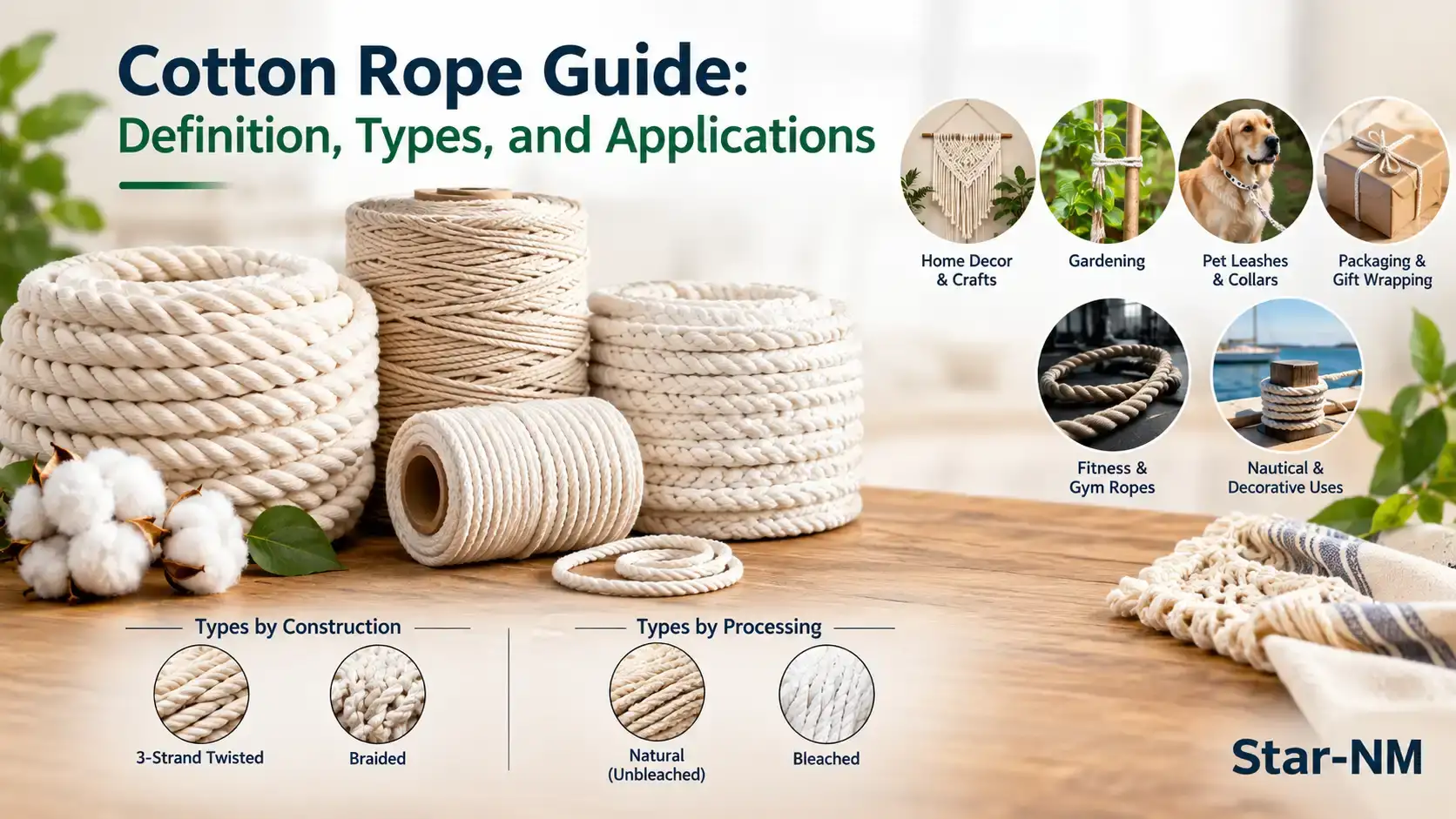
Cotton rope shows up in more places than most people realize, from the soft leash on a family dog to the cord holding up a macrame wall hanging. It is one of the oldest types of rope still in everyday use, valued for its soft texture and natural feel long before synthetic materials existed as an alternative. Despite how common it is, many people do not actually know that cotton rope comes in several different constructions and finishes, and that each version is generally better suited to a slightly different purpose than the others.
This guide walks through what cotton rope actually is, how it is made, the main types available, and the everyday applications where each type tends to work best, so that anyone encountering cotton rope for the first time can understand not just what it is, but why one version might suit a project better than another.
Cotton rope is made from the fibers of the cotton plant. These fibers are first spun into yarn, a process that twists loose cotton fibers together into a continuous strand strong enough to be worked with. Once the yarn is ready, multiple strands of it are twisted or braided together to form the final rope. The number of strands, the tightness of the twist or braid, and the thickness of the yarn all influence how the finished rope looks, feels, and performs.
Because cotton is a natural plant fiber rather than a manufactured material, cotton rope has properties that set it apart from synthetic rope made from nylon, polypropylene, or polyethylene. It has a soft, slightly textured surface that is gentle on the hands, which is one of the main reasons people choose it over stiffer synthetic alternatives for tasks that involve direct handling. Cotton also breathes better than synthetic fiber, meaning it does not trap heat or moisture against the skin the way some plastic-based ropes can. Over time, cotton rope will naturally break down and biodegrade, unlike synthetic rope, which can persist in the environment for a very long time after it is discarded.
At the same time, cotton rope does not match synthetic rope in raw strength or resistance to water and abrasion. A cotton rope left outdoors and exposed to repeated rain or humidity will weaken and degrade faster than a comparable synthetic rope. This is part of why cotton rope tends to be chosen for applications where softness, appearance, or a natural material matter more than maximum load-bearing strength or long-term outdoor durability.
Cotton rope can be categorized in two main ways: by how the rope is physically constructed, and by how the cotton fiber is processed before it becomes rope. Understanding both categories makes it much easier to pick the right rope for a specific job.
1. Three-strand twisted cotton rope. This is the traditional and most recognizable form of cotton rope, made by twisting three individual strands of cotton yarn together in a spiral pattern. The twisting process is what gives this rope its distinctive ridged, spiral texture running along its length. Three-strand twisted rope holds its shape well once tied into a knot, and because the strand structure is visible and consistent, it is relatively easy to cut, splice, or repair if needed. This construction has remained a standard choice for cotton rope across centuries precisely because it is simple to produce and simple to work with. Rope built using this same twisting method, in other materials, falls under the broader category of twisted rope as well.
2. Braided cotton rope. Instead of twisting strands together, braided rope is made by weaving strands over and under one another in a pattern similar to braiding hair. This produces a rounder, smoother finish than twisted rope, without the ridged spiral texture. Braided cotton rope itself comes in two distinct forms. Solid braid rope is woven tightly and densely, giving it a firm structure that holds its round shape well under handling. Hollow braid rope, on the other hand, is woven more loosely around an open center, which leaves it soft and flexible. This flexibility makes hollow braid rope easier to fold flat, thread through other materials such as fabric or beads, or splice by feeding one end of the rope through the hollow core of another section.
1. Natural, or unbleached, cotton rope. This version keeps the raw color of the cotton fiber largely as it comes out of processing, typically a slightly off-white, cream, or light tan shade. Because it has not gone through additional chemical treatment to alter its color, natural cotton rope tends to have a more rustic, organic look. It is often the preferred choice when a project calls for an earthy, unrefined appearance, or when buyers specifically want a rope that has gone through minimal processing.
2. Bleached cotton rope. This version goes through an additional bleaching step during manufacturing that lightens the natural fiber color to a clean, bright white. The result is a more polished and uniform appearance compared to unbleached rope. Bleached cotton rope is often chosen for projects where color consistency and a crisp, finished look matter, such as in certain home decor pieces or retail products where visual presentation plays a bigger role.
Cotton rope's combination of a soft texture, natural appearance, and reasonable strength makes it a practical material across a wide range of everyday uses. The sections below walk through the main applications and explain why cotton rope tends to be a good fit for each one.
1. Home decor and crafts. Cotton rope is a staple material in macrame projects, wall hangings, plant hangers, woven baskets, and similar handmade decor items. It is popular in this space for a few specific reasons: it holds knots securely once tied, it is easy to work with by hand without special tools, and its natural, textured look fits comfortably into a wide range of interior design styles, from minimalist to bohemian.
2. Gardening and plant support. Gardeners frequently use cotton rope to tie up climbing plants, secure vines to trellises, or bundle stems together. The soft texture of cotton rope is a genuine practical advantage here, since stiffer synthetic ropes or wires can cut into or bruise plant stems under tension, while cotton rope is gentle enough to support a plant without damaging it as it grows.
3. Pet leashes and collars. Because cotton rope is comfortable to hold and gentle against the skin, it is a popular material for pet leashes, especially among pet owners who find nylon straps or chains harsher on the hands during long walks. Braided cotton rope in particular is often used here, since its rounded, smooth surface is comfortable to grip for extended periods.
4. Packaging and gift wrapping. Thinner cotton rope is commonly used to tie packaging, wrap gift boxes, or bundle goods together in a way that adds a natural, decorative touch. This use case has grown alongside a broader preference among retailers and consumers for packaging materials that look and feel more natural than plastic ribbon or synthetic cord.
5. Fitness and gym equipment. Thicker cotton rope, usually in a braided construction, is used in gym settings for climbing ropes and battle ropes. In this context, the textured surface of the rope actually becomes an advantage, since it provides a secure grip during vigorous use, reducing the chance of the rope slipping out of a user's hands.
6. Nautical and coastal decor. Beyond functional use, cotton rope is widely used decoratively in nautical and coastal-themed settings, such as railing wraps on boats, decorative knots, or accent pieces in beach-themed interior design. Its traditional rope appearance carries a strong visual association with maritime themes, which is part of why it continues to be chosen for decorative purposes even where a synthetic rope might otherwise be more practical.
Selecting the right cotton rope comes down to matching its construction and finish to what the rope actually needs to accomplish. A three-strand twisted rope tends to work well where a traditional, classic rope appearance and straightforward handling matter most, such as in general craft use or decorative applications. A braided rope, by comparison, suits projects that call for a smoother finish, a rounder feel in the hand, or extra flexibility, such as pet leashes or macrame work that involves intricate knotting.
The choice between unbleached and bleached rope follows a similar logic. Unbleached, natural cotton rope fits projects aiming for a rustic, organic aesthetic, while bleached rope suits projects where a clean, bright, and uniform white is the visual goal, such as certain retail displays or polished home decor pieces.
Understanding these distinctions between construction types and processing types makes it far easier to choose the correct cotton rope on the first attempt, whether the rope is intended for a craft project, a pet leash, a gardening task, or general household use.
Buyers looking to source cotton rope in bulk, whether for retail, craft supply, or industrial packaging needs, can turn to Star-NM, a reliable cotton rope exporter offering twisted and braided constructions in both natural and bleached finishes, with support for custom diameters and order quantities suited to different business needs.