
SOCIAL WITH US


SOCIAL WITH US

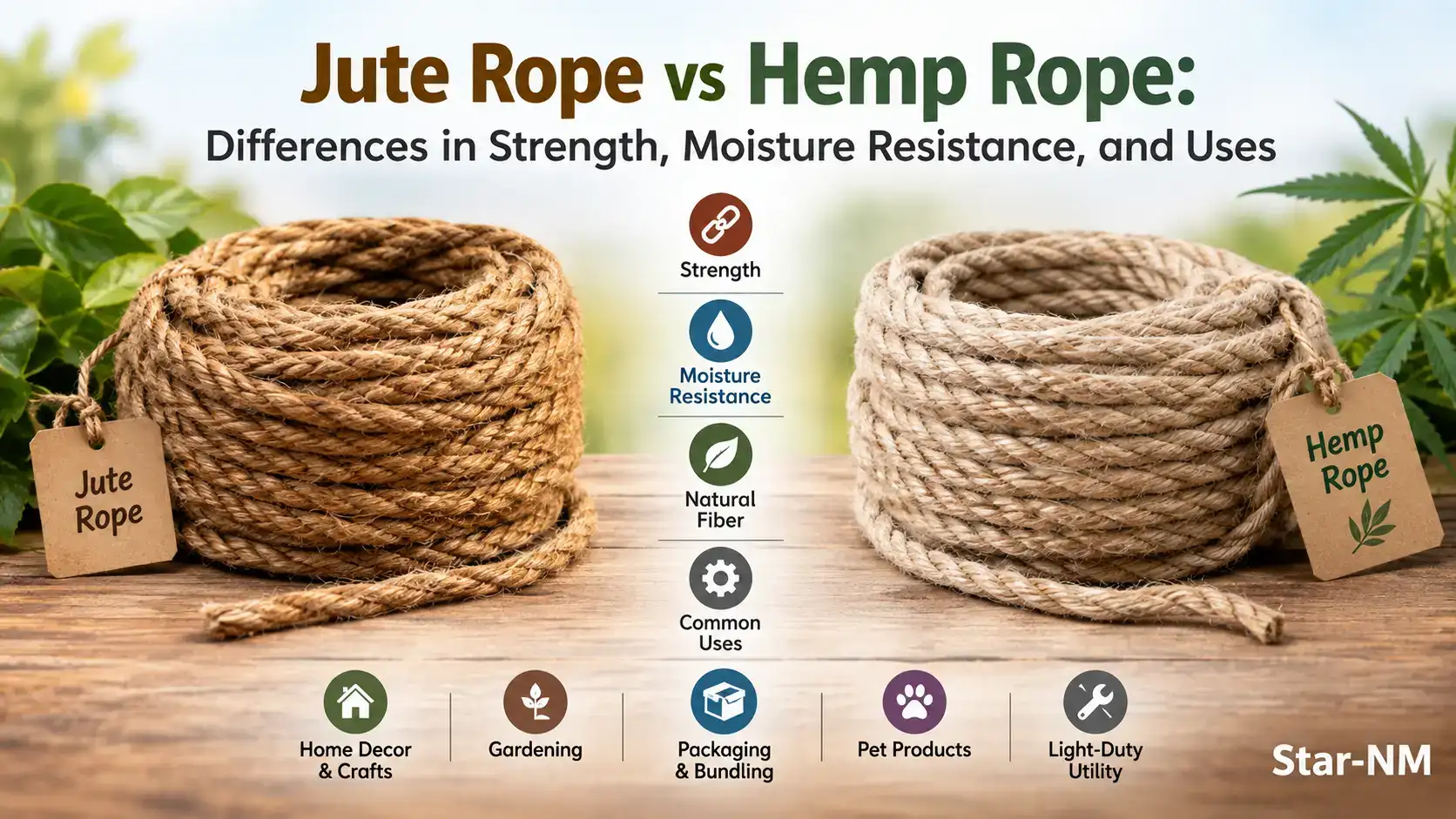
Jute rope and hemp rope look alike at first glance. Both are made from plant fibers, both have a warm, earthy appearance, and both are sold in similar twisted and braided forms, so they are often treated as interchangeable. In practice, the two ropes differ in fiber origin, feel, strength, and the way they behave when exposed to moisture, and those differences decide which one suits a particular task.
This guide explains what each rope is, how natural hemp differs from the synthetic "hemp" rope sold in many stores, and how the two compare on strength, moisture resistance, handling, and cost. It also covers common uses and basic care, so that the choice between them is based on what the rope will actually be used for.
Jute rope is made from the fibers of the jute plant, which belongs to the Corchorus genus. The fiber is long, soft, and shiny, and its warm golden-brown color is the reason jute is often called the "golden fiber." Jute is grown mainly in South Asia, and it has been used for a very long time to make sacks, burlap, textiles, twine, and rope.
To make rope, jute fibers are extracted from the plant stem, softened, and spun into coarse, strong yarn. Several strands of that yarn are then twisted together, most commonly in a three-strand construction, or braided. Because jute is a natural cellulose fiber, the finished rope has a dry, slightly rough texture, a rustic look, and it breaks down naturally when it is no longer in use.
Hemp rope is made from the fibers of the hemp plant, a variety of Cannabis sativa grown for its fiber. Hemp fiber has been used by people for thousands of years, and rope was one of its earliest and most important products. The fibers are taken from the stalk, processed, spun into yarn, and twisted or braided into rope in a way that is similar to jute.
Natural hemp rope is soft to the touch for a fiber rope, has a fibrous and rustic appearance, and gives off a mild smell similar to hay that fades over time. Some hemp ropes are also polished, which gives them a smoother, stiffer, and more uniform finish than the unpolished version, even though both are made from the same fiber.
One point causes more confusion than any other when buyers compare these two ropes: not everything sold as "hemp rope" is made from hemp. Many products sold under that name are actually made from textured polypropylene fibers that are designed to imitate the look and feel of natural hemp.
1. Natural hemp rope. This rope is made entirely from hemp fiber. It is biodegradable, soft in the hand, and has an authentic rustic look. Its weakness is moisture, since natural fibers absorb water and can rot or grow mildew when they stay damp or are stored in humid places.
2. Synthetic hemp rope. This rope is made from polypropylene, usually with a UV treatment. It resists rot, moisture, and weather, which makes it far more durable outdoors, and it copies the appearance of natural hemp quite closely. It is not biodegradable, so it does not have the natural fiber advantages that jute and natural hemp share.
When a hemp rope is being compared with jute, it is worth checking which of these two products is actually being described. Natural hemp and jute are close relatives in behavior, while synthetic hemp behaves like a plastic rope.
| Feature | Jute Rope | Natural Hemp Rope |
|---|---|---|
| Source plant | Jute (Corchorus genus) | Hemp (Cannabis sativa variety) |
| Typical color | Golden brown | Tan to light brown |
| Approximate tensile strength of the fiber | Around 200 MPa | Around 250 MPa |
| Feel | Coarse and dry, may shed loose fibers | Softer, more fibrous, polished versions are stiffer |
| Moisture resistance | Low, weakens and rots when wet | Low to moderate, still sensitive to damp |
| Long-term outdoor use | Not suited | Not suited unless protected |
| Smell | Mild, earthy | Mild hay-like smell that fades |
| Biodegradable | Yes | Yes |
| Cost | Usually lower | Usually higher |
| Best suited for | Decor, crafts, gardening, packaging | Decor, light-duty utility, heavier bundling |
1. Tensile strength. Commonly cited average values put the tensile strength of hemp fiber at roughly 250 MPa and jute fiber at roughly 200 MPa. This means hemp is slightly stronger, but the two fibers are much closer in strength than many people assume. The actual strength of a finished rope also depends on the fiber grade, the tightness of the twist, and the diameter, so two ropes of the same material can perform differently.
2. What the difference means in practice. For decor, crafts, gardening, and light bundling, the gap between the two is not noticeable, and either rope will carry the load involved. For heavier bundling or tasks with a steady pull, hemp gives a small extra margin. Neither natural rope is a substitute for a synthetic or steel rope in lifting, towing, or any task where a failure could cause injury, since natural fibers are weaker and lose strength as they age and absorb moisture.
1. How natural fibers react to water. Jute and hemp are both cellulose fibers, so both absorb water. Once a rope stays wet, its fibers swell and weaken, and mildew and rot can begin. Repeated cycles of getting wet and drying accelerate this wear.
2. Outdoor use. Neither rope is a good choice for permanent outdoor exposure. Sun, rain, and humidity slowly degrade natural fibers, and a rope left outside will eventually lose strength and may break. Hemp has traditionally been considered somewhat more tolerant than jute, but both need protection. Where a rope must stay outdoors for long periods, synthetic hemp or another synthetic rope is the more durable option.
3. Keeping natural rope from mildewing. Storing the rope in a dry, ventilated place is the main protection. A rope that has become wet should be dried completely before it is coiled or stored, since damp coils are where mildew usually starts.
1. Texture. Jute rope has a coarse, dry surface and can feel slightly scratchy against bare hands. Natural hemp rope tends to feel softer, although polished hemp is smoother and stiffer than unpolished hemp.
2. Appearance. Jute has a golden-brown color with a natural, slightly hairy look that suits rustic and earthy styling. Hemp usually appears in lighter tan and brown tones and has a fibrous character that suits vintage and industrial-style decor.
3. Shedding and fraying. Jute is known for shedding small loose fibers, especially when it is cut or handled frequently, and cut ends fray easily unless they are bound or sealed. Hemp frays as well, though it usually holds together somewhat better under repeated handling.
4. Smell. Both ropes have a natural plant smell. Hemp has a faint hay-like odor that fades with time, and airing the rope out for a few days helps it disappear faster.
Both ropes come from renewable plant fibers and break down naturally at the end of their life, which is the main reason many people choose them over plastic-based alternatives. Jute and hemp are both compostable when they are untreated, and neither leaves behind synthetic material when it decomposes. The environmental profile of synthetic "hemp" is different, since polypropylene does not biodegrade, so the environmental advantage only applies to natural hemp.
1. Home decor and crafts. Both ropes are popular in macrame, wall hangings, plant hangers, lamp bases, and wrapped decor pieces. Jute is especially common here because its golden-brown color and rustic texture suit natural interior styles, and it is easy to cut, knot, and glue.
2. Gardening. Natural rope ties up climbing plants, secures vines to supports, and bundles stems without cutting into them. For lighter tying jobs, thinner jute twine is often used in place of thicker rope, and it breaks down in the soil once the season ends.
3. Packaging and bundling. Jute and hemp are both used to tie parcels, bundle firewood or produce, and wrap gift boxes. The natural appearance also makes them popular for retail packaging where a handmade look is part of the appeal.
4. Pet products. Thicker natural rope is used to make cat scratching posts, climbing structures, and chew toys. Its rough, fibrous surface is well suited to scratching, and natural fibers avoid the plastic feel of synthetic cords.
5. Light-duty utility. Hemp, with its slightly higher strength, is often chosen for light rigging, temporary fencing, and general-purpose tying where a natural rope is preferred and the loads are modest.
Jute rope is usually more economical than hemp rope, since jute is widely grown and easier to process at scale. Hemp rope generally costs more, particularly in polished or specially finished forms. Beyond the fiber itself, price depends on the fiber grade, the diameter, the construction, and the order quantity. A cheaper rope can turn out to be the more expensive choice if it is used in conditions that shorten its life, so matching the rope to the job matters more than comparing prices alone.
1. Keep the rope dry. Moisture is the main enemy of both fibers. Ropes that get wet should be spread out or hung to dry fully before storage.
2. Avoid prolonged sunlight. UV light gradually weakens natural fibers. When a rope is not in use, storing it in a shaded, ventilated space slows this process.
3. Coil loosely. Tight coils and sharp bends can damage fibers over time. Loose coils allow air to circulate and reduce the risk of mildew.
4. Bind or seal the ends. Wrapping the cut ends with thread or tape keeps the strands from unraveling and reduces shedding.
5. Replace worn rope. A rope that feels brittle, smells musty, shows dark mildew spots, or has visibly thinned sections should be replaced rather than reused for anything that carries weight.
1. Indoor decor and crafts. Jute is usually the practical choice, since it costs less, is easy to work with, and has a natural look that fits most decor styles. Hemp works equally well where a softer feel or a lighter tone is preferred.
2. Gardening. Jute rope or jute twine suits seasonal tying and biodegrades in the garden. Hemp is a good alternative where a slightly stronger tie is needed.
3. Outdoor use over a long period. Neither natural rope is ideal. Synthetic hemp or a synthetic rope such as polyethylene or nylon holds up far better against rain and sun.
4. Heavier bundling and utility. Hemp offers a small strength advantage, though neither rope should be used for lifting or safety-critical loads.
5. Pet scratching posts and toys. Both work well, with thicker jute and hemp ropes both offering the rough texture that pets respond to.
6. Budget-sensitive projects. Jute usually offers the lower price, which makes it suitable for larger quantities used indoors or for short-term needs.
1. Is jute rope weaker than hemp rope? Slightly. Hemp fiber has a somewhat higher tensile strength, but the gap is small, and grade, twist, and diameter affect the finished rope as much as the fiber does.
2. Can jute rope be used outdoors? It can be used outdoors for short periods, such as a garden season, but it is not suited to permanent outdoor exposure. Rain, humidity, and sunlight weaken the fibers over time.
3. Is hemp rope waterproof? No. Natural hemp absorbs water and needs to dry fully after it gets wet. Synthetic hemp made from polypropylene resists water far better, though it is a different material.
4. Do jute and hemp rope smell? Both have a mild natural plant smell. Hemp has a faint hay-like odor that fades over time, and airing the rope for a few days helps.
Jute rope and hemp rope are close in appearance and behavior, and the real differences come down to a few practical points. Hemp is slightly stronger and often softer to handle, while jute is usually cheaper and has the golden-brown look that many decor and craft projects call for. Both absorb moisture, both degrade when left outdoors for long periods, and both are biodegradable, which makes them well suited to indoor, decorative, and short-term uses.
The most useful step before choosing is to confirm which material a rope is actually made from, since synthetic hemp is sold under a similar name and behaves very differently from natural fiber. Once the material is clear, matching it to the setting, whether that is a craft table, a garden bed, or a packaging line, makes the decision straightforward.
Star-NM supplies natural fiber ropes in a range of constructions and diameters, with custom lengths available for decor, gardening, and packaging projects. Samples help confirm texture and thickness before a larger quantity is ordered, which keeps the choice simple. Anyone comparing options for a reliable jute rope supplier can review the full range and match it to the project.