
SOCIAL WITH US


SOCIAL WITH US

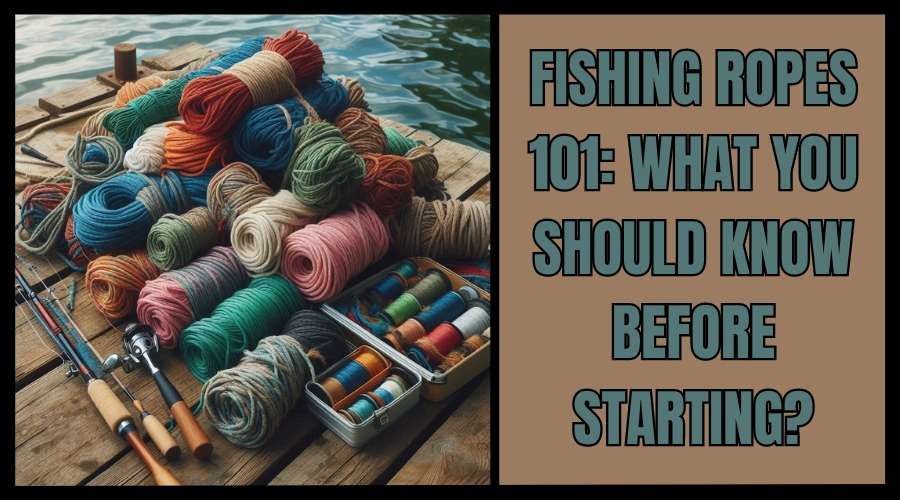
Fishing rope and fishing line are not the same product, even though the two terms get used interchangeably online. Fishing line is the thin, single-strand cord spooled onto a rod and reel for casting and hooking fish. Fishing rope is a thicker, multi-strand cordage used around commercial and recreational fishing operations for tasks such as anchoring a boat, hauling nets, rigging traps, and towing gear. This guide covers fishing rope specifically, since choosing the wrong material, twist, or diameter for this kind of rope can lead to failed anchor points, torn nets, or rope that degrades within a single season at sea.
A fishing rope is a length of twisted or braided cordage built to handle the mechanical stress of marine fishing work. Unlike fishing line, which needs to be thin and nearly invisible underwater, fishing rope needs to be strong enough to hold weight under tension, resist constant friction against boat hardware and rocky surfaces, and survive continuous exposure to saltwater without breaking down.
Fishing rope shows up in several places on a fishing vessel or around a fishing operation:
Each of these jobs puts different demands on the rope, which is why material choice and construction matter more than they might for a general-purpose rope.
The material a fishing rope is made from determines how it behaves in water, how much weight it can hold, and how long it lasts under repeated use. The four materials most commonly used in fishing rope are polyethylene (PE), polypropylene (PP), nylon, and UHMWPE.
Polyethylene (PE) is lightweight and floats in water, which makes it a common choice for surface lines such as net floats or lines that need to stay visible and untangled on top of the water. PE resists rot and mildew well, but it has lower tensile strength compared to nylon or UHMWPE, so it tends to be used for lighter-duty applications rather than heavy anchor or towing work.
Polypropylene (PP) shares PE's buoyancy and is one of the more affordable options for fishing rope. It holds up reasonably well against moisture and chemical exposure, but it loses strength faster than nylon when exposed to prolonged UV light, which matters for rope that stays on deck or in open air for long stretches. PP is a practical choice for general-purpose fishing tasks where cost matters more than maximum strength.
Nylon offers higher tensile strength than PE or PP and has natural elasticity, meaning it stretches under load and absorbs shock rather than snapping suddenly. This makes nylon rope well suited for anchor lines and mooring applications, where sudden jerks from waves or current need to be absorbed rather than transferred directly into the rope fibers. The tradeoff is that nylon sinks rather than floats, and it loses some strength when wet compared to its dry strength rating.
UHMWPE (Ultra-High-Molecular-Weight Polyethylene) sits at the top end of the strength range. It offers a very high strength-to-weight ratio, meaning a thinner UHMWPE rope can match or exceed the breaking strength of a much thicker nylon or PP rope. This makes it useful for offshore and deep-sea operations where a lighter, more compact rope is an advantage, though UHMWPE rope typically costs more than the other three materials.
Beyond material, how the rope is constructed changes how it performs. The two main construction types in fishing rope are twisted (laid) rope and braided rope.
3-strand twisted rope is made by twisting three individual strands together in a spiral pattern. This construction is simple, cost-effective, and easy to splice, which makes it a common choice for anchor lines and general towing work. Twisted rope tends to hold its shape well and is straightforward to inspect for wear, since damage to individual strands is usually visible on the outer surface.
Braided rope is constructed by weaving multiple strands over and under each other rather than twisting them. This construction produces a rope that resists kinking and lies flatter when coiled, which is useful for rope that gets handled frequently, such as lines used around traps or net rigging. Braided rope also tends to have a smoother surface, reducing friction against hands and hardware during repeated use.
Neither construction is universally better. Twisted rope is generally preferred where cost and ease of splicing matter more, while braided rope is preferred where smooth handling and kink resistance matter more.
Diameter and tensile strength are directly related, but they are not the only factors to weigh when picking a fishing rope. A thicker rope generally has a higher breaking strength, but it also weighs more, costs more per meter, and takes up more space on deck or on a reel.
The right diameter depends on the specific job:
When comparing rope options, look for the manufacturer's stated breaking strength and working load limit rather than diameter alone, since rope strength varies by material and construction even at the same diameter.
Saltwater exposure is one of the most demanding conditions a fishing rope will face. Salt crystals can work into the fibers of a rope over time, and repeated wet-dry cycles cause natural fibers to weaken faster than synthetic ones. This is one of the main reasons synthetic materials like PE, PP, nylon, and UHMWPE have largely replaced natural fiber ropes like manila or cotton in marine fishing applications, since synthetic fibers do not absorb water or salt the way natural fibers do.
Abrasion resistance matters just as much as saltwater resistance, since fishing rope regularly rubs against boat cleats, winches, rocky bottoms, and other hardware. Rope with a tighter twist or braid generally resists surface abrasion better than a loosely constructed rope, since there is less loose fiber exposed to friction. Some ropes also receive a coating or treatment during manufacturing that adds a layer of protection against both UV exposure and surface wear, which can extend usable rope life in rope that stays on deck or in direct sunlight for long periods.
Proper care extends the working life of a fishing rope and reduces the risk of failure during use.
Inspect the rope regularly. Run the rope through your hands periodically and look for fraying, flat spots, discoloration, or stiff sections. These are signs of wear that indicate a section of rope may be weaker than the rest.
Rinse rope after saltwater use. Fresh water rinses salt crystals out of the rope fibers before they have a chance to sit and cause long-term wear. This is a simple step that meaningfully extends rope life in regular saltwater use.
Store rope dry and out of direct sunlight. UV exposure breaks down synthetic fibers over time, and storing rope wet encourages mildew growth on natural fiber blends. Coiling rope loosely and storing it in a dry, shaded space helps it last longer.
Retire rope showing signs of damage. Once a rope shows consistent fraying, stiffness, or a noticeable drop in flexibility, it should be replaced rather than continued in service, particularly for anchor lines or towing lines where failure carries real safety risk.
The right fishing rope comes down to matching material, construction, diameter, and strength to the specific job it needs to do. An anchor line calls for a different rope than a net attachment line, and a rope built for offshore towing needs different properties than one used for handling traps close to shore. Getting familiar with these basics before buying rope in bulk helps avoid the common mistake of choosing rope based on price or diameter alone, without checking whether the material and construction actually fit the application.
Sourcing from a reliable fishing rope manufacturer makes the difference between rope that performs consistently and rope that fails when it matters most. Star-NM manufactures fishing rope in PE, PP, and other synthetic materials, with twisted and braided construction options built for anchor lines, trawling, net attachment, and general marine fishing use. Each batch is tested for strength and consistency before it ships, giving buyers a dependable option for bulk orders.